PM2.5 vs. PM10 vs. Particle Counter: Key Differences

PM2.5 vs. PM10 vs. Particle Counter: What Are the Differences and How to Choose the Right Instrument?
PM2.5 monitors, PM10 monitors, and particle counters are widely used to assess airborne particles in various environments. Although these instruments are related to air quality monitoring, they differ in measurement principles, reported units, and intended applications.
Understanding these differences is essential when selecting equipment for industrial facilities, office buildings, laboratories, manufacturing processes, and cleanrooms.
This article explains how PM2.5 and PM10 measurements differ from particle counting, compares their applications, and provides practical guidance for selecting the most suitable instrument.
1. What Are PM2.5 and PM10?
Particulate Matter (PM) refers to tiny solid particles and liquid droplets suspended in the air. These particles are commonly classified according to their aerodynamic diameter.
PM2.5 – Fine Particulate Matter
PM2.5 refers to fine particulate matter with an aerodynamic diameter generally of 2.5 micrometers (µm) or smaller.
Because of their small size, these particles can penetrate deep into the respiratory system.
Common sources include:
Vehicle exhaust emissions
Industrial combustion processes
Smoke and biomass burning
Certain manufacturing activities
Secondary particles formed through atmospheric chemical reactions
PM10 – Inhalable Particulate Matter
PM10 refers to particulate matter with an aerodynamic diameter generally of 10 micrometers (µm) or smaller.
PM10 includes PM2.5 particles as well as larger particles within the PM10 size fraction.
Common sources include:
Construction and demolition activities
Road dust
Material handling operations
Agricultural activities
Industrial processes
How Are PM2.5 and PM10 Measured?
PM2.5 and PM10 monitors typically report particulate mass concentration in:
µg/m³ (micrograms per cubic meter)
Depending on the instrument, measurement technologies may include optical sensing, gravimetric methods, or other approved measurement techniques.
These monitors are commonly used for ambient air quality assessments, indoor air monitoring, and industrial dust surveillance.
2. What Is a Particle Counter?
A Particle Counter, also known as an Airborne Particle Counter, is an instrument designed to count airborne particles and classify them according to their optical-equivalent particle size.
Many optical particle counters (OPCs) operate using light-scattering technology. When particles pass through a measurement chamber, they scatter light, which is detected and analyzed by the instrument.
Depending on the model, particle counters may provide multiple size channels, such as:
0.3 µm
0.5 µm
1.0 µm
2.5 µm
5.0 µm
10.0 µm
The measurement results are typically expressed in:
Particles per liter (Particles/L)
Particles per cubic meter (Particles/m³)
Particle counters are commonly used in environments where airborne particle contamination must be carefully controlled.
Typical applications include cleanrooms, semiconductor manufacturing, pharmaceutical production, medical device manufacturing, and precision electronics assembly.
3. PM2.5/PM10 Monitor vs. Particle Counter: Comparison
Feature | PM2.5 / PM10 Monitor | Particle Counter |
|---|---|---|
Primary measurement | Particle mass concentration | Particle number concentration |
Common units | µg/m³ | Particles/L or Particles/m³ |
Particle size information | PM1, PM2.5, PM10, depending on model | Multiple particle size channels |
Measurement technology | Optical, gravimetric, or other methods | Typically optical light scattering |
Main purpose | Air quality and dust monitoring | Airborne particle contamination monitoring |
Typical environments | Offices, buildings, factories | Cleanrooms, laboratories, controlled manufacturing |
Relevant standards | Applicable air quality standards and measurement methods | ISO 14644-1 and ISO 21501-4, as applicable |
Important: Particle mass concentration and particle number concentration are different measurement quantities. Their values should not be compared directly or considered interchangeable.
4. Can a Particle Counter Measure PM2.5 and PM10?
Some particle counters can estimate PM2.5 and PM10 mass concentrations using particle count and size-distribution data.
However, this capability depends on the instrument's design and software.
The conversion from particle number concentration to estimated mass concentration involves assumptions about particle properties, such as:
Particle density
Particle shape
Optical characteristics
Particle size distribution
These factors may influence measurement accuracy.
Therefore, not every particle counter is suitable for reporting PM2.5 or PM10 mass concentrations.
For regulatory monitoring, environmental assessments, or compliance reporting, users should verify that the selected instrument and measurement method meet the applicable requirements.
5. Which Instrument Is Suitable for Different Industries?
Office Buildings, Schools, and Public Facilities
Recommended: PM2.5 / PM10 Monitor
These instruments are suitable for assessing indoor air quality, monitoring dust levels, and evaluating general air filtration performance.
Industrial Manufacturing Facilities
Recommended: PM2.5 / PM10 Monitor or Specialized Dust Monitoring Equipment
For general airborne dust monitoring, PM monitors may be appropriate.
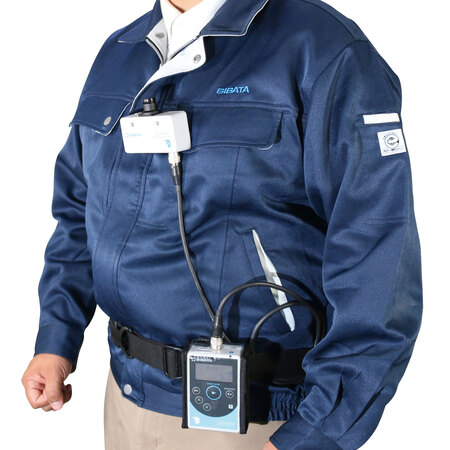
However, workplace exposure assessments may require specialized personal sampling equipment, gravimetric sampling methods, or instruments designed for specific occupational dust fractions.
Electronics and Semiconductor Manufacturing
Recommended: Airborne Particle Counter
Particle counters are commonly used to monitor airborne contamination that may affect manufacturing processes and product quality.
Pharmaceutical and Medical Device Manufacturing
Recommended: Cleanroom Particle Counter
Particle counters are essential tools for monitoring airborne particulate cleanliness in controlled environments.
The selected instrument should meet the applicable cleanroom classification, calibration, and monitoring requirements.
Laboratories and Controlled Environments
Recommended: PM Monitor or Particle Counter, Depending on the Application
The selection depends on whether the objective is to measure particulate mass concentration or airborne particle number concentration.
6. Understanding ISO 14644-1 and ISO 21501-4
Two important standards frequently associated with airborne particle counters are ISO 14644-1 and ISO 21501-4.
ISO 14644-1 – Cleanroom Classification
ISO 14644-1 specifies the classification of air cleanliness in cleanrooms and associated controlled environments based on airborne particle number concentrations at specified particle sizes.
It is widely used in industries that require controlled levels of particulate contamination.
ISO 21501-4 – Particle Counter Calibration
ISO 21501-4 specifies calibration and verification methods for light-scattering airborne particle counters.
It addresses important performance characteristics, including:
Particle size calibration
Counting efficiency
Particle size resolution
False count rate
Sampling flow rate
When selecting an airborne particle counter for cleanroom applications, users should verify that the instrument's specifications, calibration documentation, and measurement capabilities meet the applicable requirements.
7. How to Choose the Right Air Monitoring Instrument
Before purchasing an air quality monitor or particle counter, consider the following factors.
1. Measurement Objective
Determine whether the application requires particle mass concentration or particle number concentration.
2. Particle Size Range
Verify that the instrument can measure the required particle size fractions or channels.
3. Measurement Units
Confirm whether the required results should be reported in µg/m³, Particles/L, or Particles/m³.
4. Applicable Standards
Check whether the instrument must comply with environmental monitoring requirements, occupational hygiene methods, or cleanroom standards.
5. Data Logging and Reporting
Consider whether the instrument supports data storage, trend analysis, and exporting measurement reports.
6. Calibration and Traceability
Review the calibration documentation, service requirements, and relevant measurement traceability.
Selecting the correct instrument based on the application helps improve measurement reliability and avoids purchasing equipment that does not meet operational requirements.
8. Frequently Asked Questions (FAQ)
Q1: Can a PM2.5 monitor replace a particle counter?
Generally, no.
PM2.5 monitors primarily report particulate mass concentration, while particle counters measure particle number concentrations by size.
For cleanroom classification, a suitable airborne particle counter is normally required.
Q2: Can every particle counter be used for cleanroom testing?
No.
The particle counter must have the appropriate particle size channels, sampling flow rate, counting performance, and calibration documentation for the intended cleanroom testing requirements.
Q3: Does PM10 include PM2.5?
Yes.
PM10 includes particles within the PM2.5 size fraction. Therefore, PM2.5 and PM10 mass concentration values should not be added together to calculate total particulate matter.
Q4: Which instrument should be used for factory dust monitoring?
For general environmental dust monitoring, a PM2.5/PM10 monitor may be suitable.
For occupational exposure assessments, specialized sampling equipment and recognized occupational hygiene measurement methods may be required.
Q5: Can a particle counter display PM2.5 and PM10 readings?
Some models offer estimated PM2.5 and PM10 readings.
However, users should verify whether these values are supported by the instrument's specifications and whether they are suitable for the intended measurement requirements.
9. Conclusion: PM2.5, PM10, and Particle Counter
PM2.5 and PM10 refer to particulate matter size fractions, and PM monitoring instruments typically report their mass concentrations in µg/m³.
A particle counter, on the other hand, measures the number of airborne particles in specified size channels and is particularly useful for cleanroom monitoring and contamination control.
The best instrument depends on the measurement objective, operating environment, applicable standards, and required reporting data.
Choosing the correct measurement technology is essential for achieving reliable results and meeting operational or compliance requirements.
Need Help Choosing a PM2.5 Monitor or Particle Counter?
Santa Technology Co., Ltd.
We provide measuring and testing instruments for industrial applications, laboratories, environmental monitoring, and quality control.
Whether you need a PM2.5/PM10 monitor for indoor air quality assessment or an airborne particle counter for controlled environments, our team can help you compare instrument specifications and select suitable equipment for your application.
Website: www.santatechnology.com
Tel: +66 2-101-3454
LINE: @santatech
Contact Santa Technology for product information and technical consultation.
Related products

Particle counter cem dt-9881m
Particle counter cem dt-9881m
THB 46,075

Particle counter cem dt-9880m
Particle counter cem dt-9880m
Request a quotation
SIBATA Digtal Dust Indicator LD-5R
SIBATA Digtal Dust Indicator LD-5R
THB 158,000

SIBATA Digital Dust Indicator LD-5D
The LD-5D uses a sheathed air detector mechanism andincludes a built-in suction pump. It is a relativeconcentration indicator with a light scattering systemand can perform measurements at tunnel constructionsites and other worksites
Request a quotation