
What types of fire suppression systems are available for buildings, and which one should you choose?
Understanding Fire Suppression Systems: How Do They Differ and Which One Is Right for You?

Many people may wonder: what types of fire suppression systems are used in buildings, and how do they differ? Should an office building and a condominium use the same system? Do factories and warehouses require a more specialized design? This article provides an overview of various fire suppression systems—explaining how they work, their key advantages and limitations, and how to select the most appropriate system for your specific needs—ensuring you can make an informed decision tailored to real-world applications.
What types of fire suppression systems are used in buildings?
There are various fire protection and suppression systems, and the choice depends on the building's intended use, the type of fuel present, the level of risk, and the specific requirements of each project. Common systems found in buildings and industrial facilities include sprinkler systems, standpipe and hose systems, clean agent systems, carbon dioxide (CO2) systems, and foam systems. Additionally, there are specialized systems—such as water mist, dry pipe, pre-action, and deluge systems—which are selected based on the specific needs of the area.
1. Automatic Sprinkler System
This is a popular fire suppression system commonly found in condominiums, office buildings, shopping malls, and hotels. It operates on the principle that when the temperature around a sprinkler head reaches a specific threshold, the glass bulb inside breaks, releasing water only at the exact location of the heat—contrary to the common misconception that it sprays water throughout the entire building simultaneously. Due to its flexibility and effectiveness, this system is the most frequently chosen fire suppression solution for many buildings.
2. Standpipe and Hose System
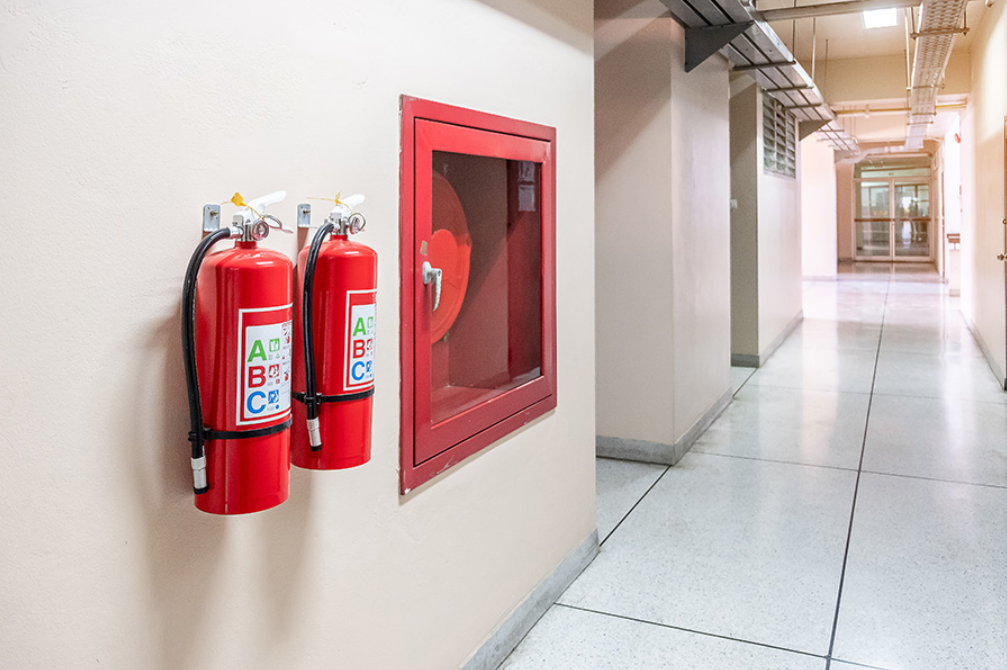
A standpipe and hose system is designed to allow firefighters or trained personnel to access water for firefighting directly via hose cabinets located within a building. This system typically operates in conjunction with a fire pump system to maintain sufficient water pressure, particularly in high-rise buildings or large-scale facilities.
3. Clean Agent Fire Suppression System
A fire suppression system designed to protect critical equipment without leaving residue or causing further damage. Examples of agents used include FM-200 and Novec 1230. This system is ideal for high-value areas that require continuous operation—such as server rooms, data centers, or electrical control rooms—as it can extinguish fires rapidly without harming electronic equipment.
4. Carbon Dioxide (CO₂) Fire Suppression System
This system operates by reducing oxygen levels within an area to a point where combustion can no longer be sustained. It is therefore suitable for specialized environments, such as machinery rooms or certain types of industrial facilities.
However, because the reduction of oxygen can pose a danger to humans, this system requires stringent safety measures, including advance warning alarms and strict access control for the area.
5. Foam System

A foam system is designed for fires involving flammable liquids, such as oils or chemicals. The foam works by covering the surface of the liquid, cutting off its contact with oxygen and suppressing the evaporation of fuel vapors. This system is well-suited for industrial plants, chemical warehouses, or fuel storage areas—environments that require specialized fire suppression solutions beyond standard water-based systems.
Fire Alarm Systems: Essential Partners in Fire Safety
While fire suppression systems are designed to control and extinguish fires once they have already begun, the earliest possible detection is the true foundation of safety. This is why a fire alarm system must work in seamless coordination with fire suppression systems—because every initial second is critical when it comes to protecting lives and property. Let’s take a look at the key components you should know about.What is the difference between a smoke detector and a heat detector?
Smoke Detector
A smoke detector operates by detecting smoke particles suspended in the air. It is suitable for general areas—such as residential rooms, offices, or building lobbies—as it can detect an incident at an early stage, before temperatures rise significantly.
Heat Detector
A heat detector is triggered when the temperature reaches a specific threshold or rises rapidly. It is well-suited for areas where dust, vapors, or smoke are present during normal operations—such as kitchens or mechanical rooms—as it helps to reduce the occurrence of false alarms.Addressable System vs. Conventional System
Conventional System
A conventional system divides a building into zones. When an alarm is triggered, it indicates only which zone the incident has occurred in. This system is suitable for small- to medium-sized buildings, as it is cost-effective and easy to maintain.
Addressable System
An addressable system can pinpoint the exact location of an incident—for example, identifying that detector number 12 on the 5th floor has been triggered. This allows for a faster and more precise response. It is ideal for large buildings, such as hospitals, hotels, or high-rise office complexes that require professional-grade management.Integration with a Building Management System (BMS)
In modern buildings, fire alarm systems are typically integrated with a Building Management System (BMS) to facilitate automated responses, such as:
Shutting down air conditioning systems to limit the spread of smoke.
Unlocking emergency exit doors.
Directing elevators to return to a designated safe floor.
Coordinating with automatic fire suppression systems.
This level of integration ensures that a building can respond to emergencies in a systematic way—moving beyond the mere presence of individual devices to achieve efficient, coordinated operation.Which fire suppression system should you choose? What factors should you consider?
Since every space carries different risks and serves a unique purpose, the selection of a fire suppression system should be based on both engineering analysis and a clear understanding of how the space is used in daily operations. Here are the key factors to consider:1. Building Usage Type
Residential buildings, office buildings, hospitals, factories, and warehouses each present different risk profiles.
Residential buildings prioritize the safety of occupants and rapid evacuation.
Office buildings must account for the presence of a large number of people at any given time.
Factories or warehouses may contain flammable materials or specialized machinery.
Determining the type of usage is the first step for engineers in planning an appropriate fire protection system, as it directly influences the choice of equipment, pipe sizing, water pumps, and the required level of protection.
2. Fire Load (Fuel Risk Level)
"Fire Load" refers to the total amount of potential thermal energy that can be generated by materials present within a given space—such as large quantities of documents, wooden furniture, chemicals, or flammable liquids. Areas with a high fire load require fire suppression systems that offer faster response times and broader coverage, such as specialized sprinkler systems or foam-based suppression systems in cases involving flammable liquids.
Legal Requirements and Engineering Standards

Fire protection systems must comply with building control regulations and relevant engineering standards for fire safety. Adherence to these standards is necessary not only to obtain building occupancy permits but also to ensure that the systems function effectively during an emergency—meaning they must perform as designed, rather than merely being installed in accordance with the blueprints.
The Importance of Installation and Maintenance
Regular inspection and maintenance are the most critical factors in ensuring that a fire protection system is truly ready for use and operating at peak efficiency. Every piece of equipment has a finite lifespan; components can deteriorate over time and may malfunction if left unattended. Consequently, managing a fire protection system is a matter of adhering to strict standards and disciplined procedures, rather than merely reacting to problems as they arise. This requires the implementation of the following inspection and maintenance measures:The Importance of Installation and Maintenance
Regular inspection and maintenance are the most critical factors in ensuring that a fire protection system is truly ready for use and operating at peak efficiency. Every piece of equipment has a finite lifespan; components can deteriorate over time and may malfunction if left unattended. Consequently, managing a fire protection system is a matter of adhering to strict standards and disciplined procedures, rather than merely reacting to problems as they arise. This requires the implementation of the following inspection and maintenance measures:Inspection of Water Pressure / Fire Pump
The fire pump serves as the heart of the system. If water pressure is insufficient, the system may fail to control a fire effectively, even if sprinkler heads are installed throughout the premises. Consequently, inspections cover water pressure during pump operation, backup power systems (or diesel engines), the condition of piping and valves, and pressure-regulating equipment.
Frequently Asked Questions (FAQ)
Q: Is it mandatory to install a fire suppression system in all types of buildings?
A: In general, most buildings are required to have a fire suppression system in accordance with building control regulations. The specific type of system depends on the building category, its total area, and the level of fire risk.
Q: Do sprinkler systems activate throughout the entire building at once?
A: No. Sprinkler heads activate only in the specific areas where the temperature reaches a predetermined threshold; they do not all discharge water simultaneously. This helps to contain and limit fire damage to the affected area.
Q: How often should the fire suppression system be inspected?
A: Inspections and tests should be conducted at scheduled intervals—such as monthly, quarterly, and annually—to ensure that the system is ready to operate immediately in the event of an actual emergency and remains in compliance with relevant safety standards.
For organizations or buildings requiring professional-grade systems, SANTA Technology Co., Ltd. stands as an expert in the design and installation of fire alarm and fire suppression systems. The company utilizes equipment certified to UL/FM standards and employs a team of specialized, trained engineers. Beyond installation, SANTA Technology provides comprehensive after-sales support and maintenance services to ensure that these systems continue to operate at peak efficiency.
Design and install your fire protection system with confidence—consult the team of experts at SANTA Technology here:
Santa Technology Co., Ltd.
2/15 Moo 4, Soi Kamnan Prasert, Khlong Aen Road,
Khlong Si, Khlong Luang, Pathum Thani 12120
Contact Channels
Line: @santatech
Tel: 021013454
Facebook: Santa Technology Company Limited


