
What are the standards for cleanrooms?
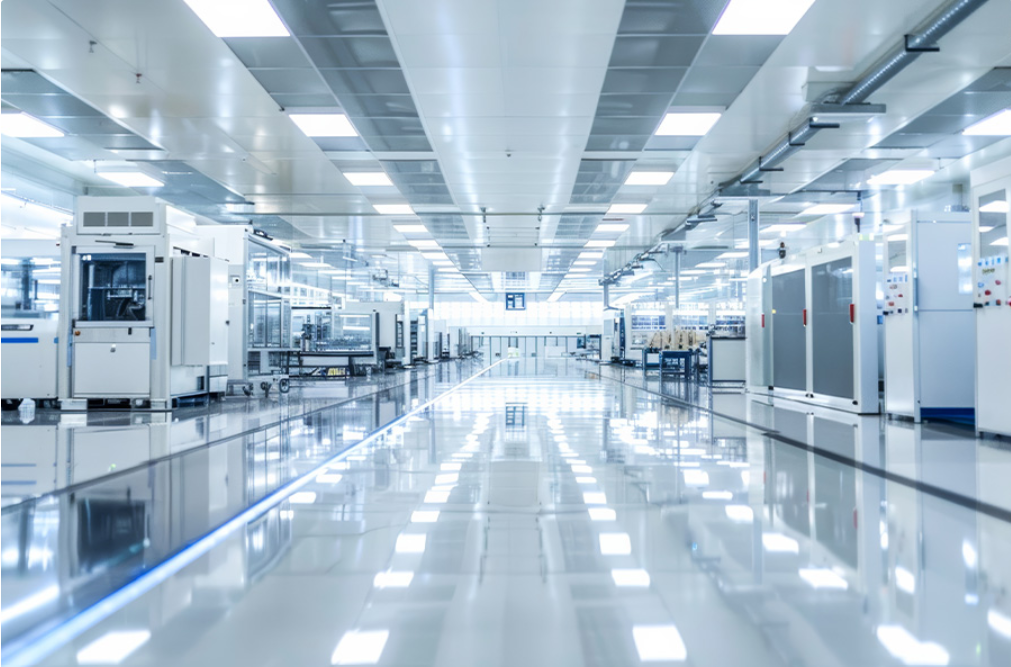
In the modern manufacturing world, "cleanliness" is a crucial factor that directly impacts product quality, safety, and customer trust. Whether it's the pharmaceutical, food, electronics, medical device, or scientific laboratory industries, all production systems require one thing in common: a cleanroom.To ensure that a cleanroom meets established standards and maintains consistent quality, this article outlines the essential cleanroom standards that manufacturing facilities should be aware of. This information will assist you in designing, constructing, or upgrading your systems in compliance with international requirements, helping to ensure a smooth and successful inspection process.What is a cleanroom, and why is it essential for modern industry?
A cleanroom is a production environment where levels of dust, airborne particles, temperature, humidity, and air pressure are strictly controlled. This is done to prevent contamination that could compromise product quality. Cleanrooms typically utilize advanced air filtration systems—such as HEPA or ULPA filters—and are constructed using materials that are easy to clean and resistant to the accumulation of germs or contaminants.Modern industries require cleanrooms because their manufacturing processes have become increasingly sophisticated and must adhere to stringent safety standards—for instance, in the food, pharmaceutical, electronics, and medical sectors. Precise environmental control ensures consistent product quality, minimizes the risk of contamination, and enhances the long-term reliability of a manufacturing facility.An Overview of Cleanroom Standards You Should Know
Cleanroom standards are established to regulate air cleanliness levels, particle counts, pressure, temperature, and humidity, as well as other environmental conditions that could potentially lead to production errors. Understanding these standards is crucial before beginning the design of a cleanroom—especially for those preparing for an audit or seeking certification from relevant authorities.ISO 14644 Standard (International Cleanroom Standard)
What is ISO 14644?
ISO 14644 is an international standard used to define the cleanliness levels of cleanrooms. It categorizes cleanrooms into "classes" based on the concentration of airborne particles. This standard is the most widely used in industries such as electronics, semiconductors, medical devices, and scientific laboratories.
ISO 14644 Classification
ISO classes are categorized as follows:
Class 1 – Class 3: Extremely high levels of cleanliness, used in high-tech industries.
Class 4 – Class 6: Used in the manufacturing processes for precision components.
Class 7 – Class 8: Commonly found in the food and pharmaceutical industries, as well as in general assembly rooms.
Class 9: A basic level of cleanliness, attainable by standard rooms.
The lower the number, the higher the level of cleanliness; this requires more sophisticated filtration systems—such as HEPA or ULPA filters—along with stricter environmental controls.
GMP Standards for the Pharmaceutical and Food Industries
What is GMP?
GMP (Good Manufacturing Practice) is a standard focused on ensuring safety in the production of food, pharmaceuticals, cosmetics, and medical products. It is designed to prevent contamination and guarantee that products are “safe for consumers.”
GMP Requirements for Cleanrooms:
Walls, ceilings, and floors must be easy to clean.
Airflow systems must be designed to control the direction of air movement.
Room pressure must be regulated according to cleanliness zones.
Cross-contamination risks must be minimized.
Materials used must not harbor microorganisms or shed particles.
These standards are adopted by many manufacturing facilities in Thailand, as they serve as a fundamental requirement for obtaining FDA (Thai FDA) approval and passing audits by international clients.HACCP Standards for Food Processing Facilities
HACCP (Hazard Analysis and Critical Control Points) is a system used to assess risks and critical control points that may affect food safety. Cleanrooms designed to meet HACCP standards must be capable of controlling dust, contaminants, and sources of microbial growth. Furthermore, production areas must be designed to prevent cross-contamination.
Consequently, cleanrooms in the food industry focus on the segregation of clean zones, the use of equipment that is easy to clean, and air management systems that ensure air does not flow back or circulate from "dirty" (uncontrolled) zones into clean areas.
Federal Standard 209E (Discontinued, yet still encountered in some facilities)
Although Federal Standard 209E has been superseded by ISO 14644, it is still used in some facilities as a reference or for benchmarking purposes. It categorizes cleanrooms into classes—such as Class 1, 10, 100, 1,000, and 100,000—a classification system that was once widely adopted in the electronics and biomedical sectors.
Understanding FS 209E makes it easier to interpret or analyze legacy documentation, which is particularly useful for facilities currently undergoing renovations or upgrading their systems to comply with ISO 14644 standards.
Specialized Safety Standards (Biosafety / Medical Devices)
Certain industries require additional, specific standards—for example:
Biosafety Level (BSL)
Used in microbiology laboratories, BSLs are categorized from 1 to 4 based on the level of risk posed by the pathogens involved. Each level entails specific requirements, such as negative pressure systems, area containment, and the use of advanced personal protective equipment (PPE).
Standards for medical devices require the control of particles, microbial contamination, and equipment cleanliness. Compliance with ISO Class 5–7 standards may also be necessary to meet the requirements set by the FDA or various other international standards.
Factors Influencing the Selection of Cleanroom Standards
Product Type
Products with a high level of risk—such as components intended for internal use within the human body, pharmaceuticals, or food—are subject to stricter standards than those in general industries.
Production Processes
Certain processes require an exceptionally high level of cleanliness, such as aseptic filling or semiconductor assembly.
Customer and Regulatory Requirements
If a facility serves international clients, it must ensure compliance with specific quality agreements or standards stipulated by those clients.
Budget and Operational Requirements
The complexity of an HVAC system—including its materials and auxiliary equipment—directly impacts costs; therefore, a thorough analysis is essential to ensure an appropriate solution.
Cleanroom Testing and Certification
Cleanroom standards extend beyond the design phase; they require rigorous testing, including:
Particle Count Test
Air Flow & Air Change Rate
Pressure Differential
HEPA Integrity Test
Temperature & Humidity Test
Recovery Test
Filter Leakage
These inspections are essential for ensuring that a facility meets the required standards and is ready for safe, full-scale production.
Frequently Asked Questions About Cleanroom Standards
Q: What is the difference between ISO 14644 and GMP?
A: ISO focuses on controlling airborne particles, whereas GMP focuses on consumer safety and the prevention of product contamination.
Q: Should food manufacturing facilities use ISO or HACCP?
A: Most facilities use a combination of HACCP and GMP; ISO Class 7–8 standards may also be applied, depending on the specific production zone.
Q: Why is a Particle Count Test necessary before starting production?
A: It serves as a key indicator of whether a room meets the required cleanliness class. Failure to meet these standards can lead to contamination issues and product defects.

Q: What standards should a new factory adopt from the outset?
A: It is recommended to implement ISO 14644, along with GMP or HACCP—depending on the type of product—to ensure readiness for both domestic and international audits.
There are various cleanroom standards, each designed to accommodate specific industrial requirements. Selecting the appropriate standard from the outset ensures a safe production process and high-quality products, while also facilitating compliance with regulatory assessments. Furthermore, it mitigates the risk of contamination, which could otherwise lead to unforeseen and costly damage.If your facility requires the design, construction, or renovation of a cleanroom that meets international standards, Santa Technology offers expert, hands-on experience with ISO 14644, GMP, HACCP, and a full range of specialized cleanroom systems. Our team provides comprehensive services—from consultation and design to installation and compliance verification—tailored to your business needs. We are committed to delivering high-quality, practical solutions designed for long-term, reliable performance.
